About Mold Temperature Controller
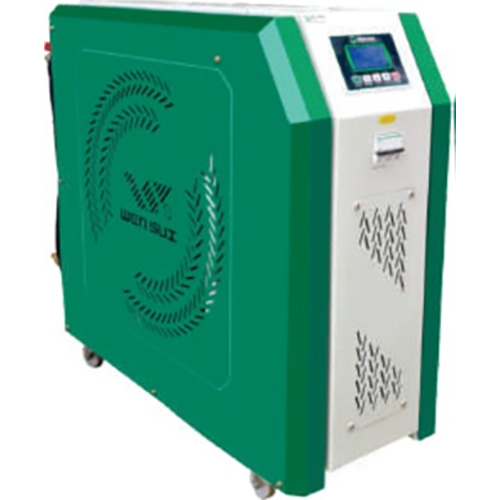
Mold Temperature Controllers are precision units used to regulate and maintain the temperature of molds in injection molding and other processes. They circulate heated or cooled fluid to ensure consistent mold temperature, improving product quality, reducing cycle time, and enhancing overall production efficiency.
- Application Injection Moulding
- Heating Capacity36 kW
- Max Temperature180 C
- Pump Capacity40 L/min
- Phase 3 Phase
- Cooling Type Water Cooled
Precision Temperature ManagementExperience unmatched temperature accuracy (1C) with our Mold Temperature Controller. Harnessing a microprocessor PID controller, it maintains optimal conditions required for high-quality manufacturing, preventing defects and ensuring consistent output across multiple applications.
Flexible Integration and OperationWith connection ports ranging from G1/2 to G2 and variable pump power (0.37 kW-4 kW), this controller seamlessly integrates into both compact and large-scale facilities. Its caster wheels ensure easy relocation for different production lines, supporting adaptable workflow requirements.
Enhanced Safety and ReliabilityPrioritizing safety, the device incorporates overheat, overcurrent, and water shortage alarms along with an automatic fault detection system. The powder-coated steel exterior and stainless steel interiors ensure lasting durability, while efficient insulation helps maintain thermal stability.
FAQ's of Mold Temperature Controller:
Q: How does the Mold Temperature Controller maintain precise temperature control?
A: The controller uses a PID microprocessor system with a stainless steel electric heater and high-efficiency heat exchangers, circulating the heat transfer medium in a closed loop. This allows it to regulate and maintain the set temperature within an accuracy of 1C, ensuring consistent conditions during operation.
Q: What industries and processes can benefit from using this Mold Temperature Controller?
A: This controller is ideal for plastic injection molding, die casting, extrusion, chemistry, and pharmaceutical applications. It stabilizes mold temperature, which helps reduce cycle times, improve product quality, and minimize material waste across various industrial processes.
Q: When should the water supply or heat transfer medium be checked or replaced?
A: It's advisable to check the water supply or heat transfer medium before each production cycle. Routine inspections and maintenance schedules-typically every few months-help ensure uninterrupted operation and prolong component lifespan by preventing buildup or shortages.
Q: Where should the controller be installed for optimal performance?
A: Place the Mold Temperature Controller on a flat, stable surface near the equipment it will serve, ensuring easy access to connection ports. Thanks to its caster wheels, relocating the unit is convenient if production flow changes or maintenance is required.
Q: What is the process for handling an alarm or system fault?
A: If an alarm indicates overheat, overcurrent, or water shortage, stop operation and follow the digital display instructions. Inspect the related component, rectify the issue, and restart after the automatic safety interlock verifies system integrity. Regular monitoring and prompt responses reduce operational downtime.
Q: How does direct cooling differ from indirect cooling in this unit?
A: Direct cooling involves the heat transfer medium being cooled directly via the exchanger, while indirect cooling separates the cooling medium from the heat transfer medium. The system supports both methods, providing flexibility for different process requirements and improving thermal efficiency.




 English
 Spanish
 French
 German
 Italian
 Chinese (Simplified)
 Japanese
 Korean
 Arabic
 Portuguese
 Send Inquiry
 Send Inquiry

